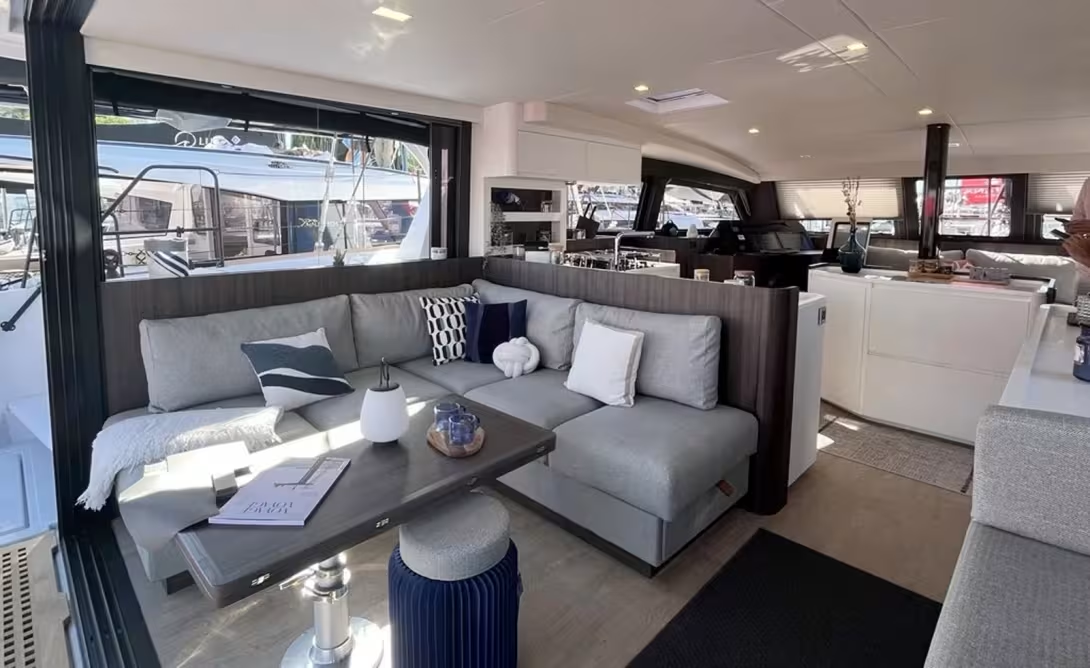
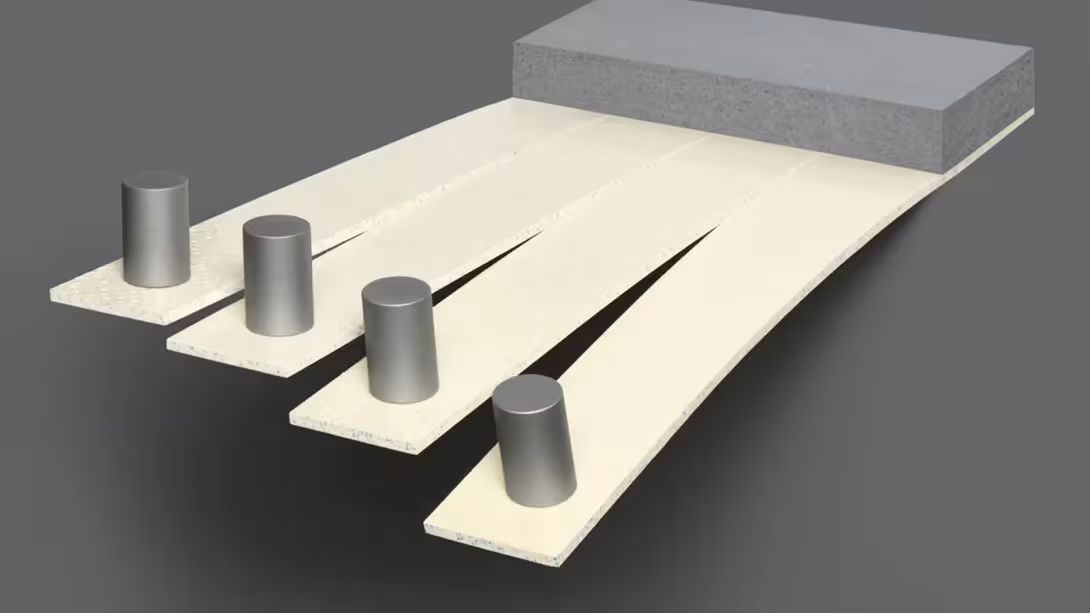

Having worked with Mercedes, Porsche, BMW, Volvo, Stellantis and Renault, Ascorium began exploring marine applications around two years ago. Its CompoLite 2D solution is specifically designed to replace plywood in interior fittings, with a claimed weight reduction of approximately 50%.
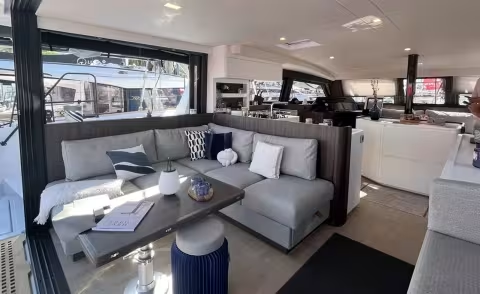
The material combines a polyurethane foam core with fiber reinforcement encapsulated in polyurethane. Its main advantage? It can be worked just like plywood, using the same machines, tools and CNC machining programs. It is also compatible with the finishes commonly used in the marine industry, including HPL, CPL and textured PU coatings. Bulkheads, doors, flooring, furniture and tables can therefore be manufactured without disrupting established shipyard practices.
On a multihull, every pound saved can improve performance or help offset the increasing weight of onboard equipment, particularly batteries. CompoLite can also be used in refit projects to reduce the weight of existing interiors.
With CompoLite 3D, Ascorium takes the concept further, offering components with complex geometries that go beyond traditional flat panels.
With operations in Europe, China and the United States, the company is now looking to bring these solutions to multihull builders and Owners.